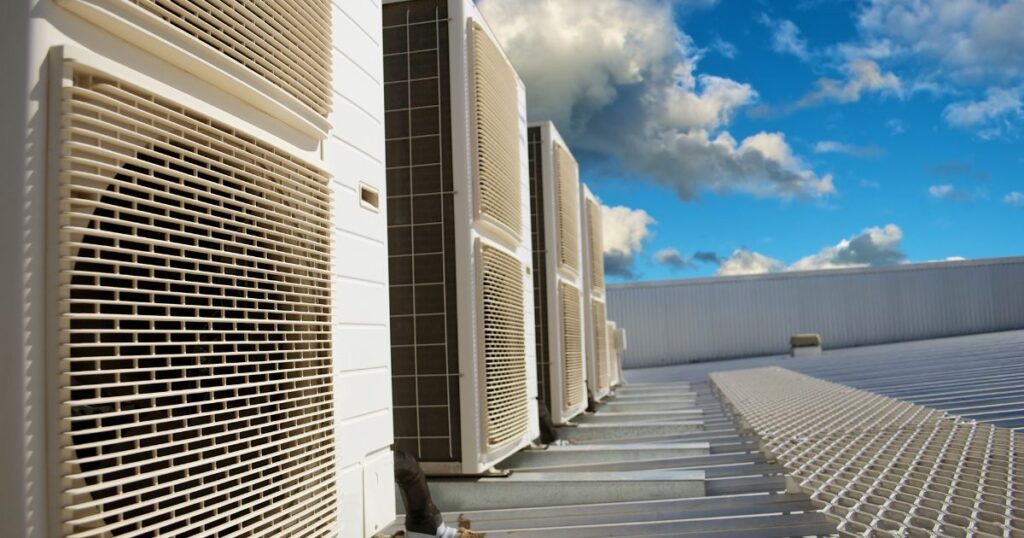
How the same refrigeration cycle serves different temperatures, loads, controls, and risks.
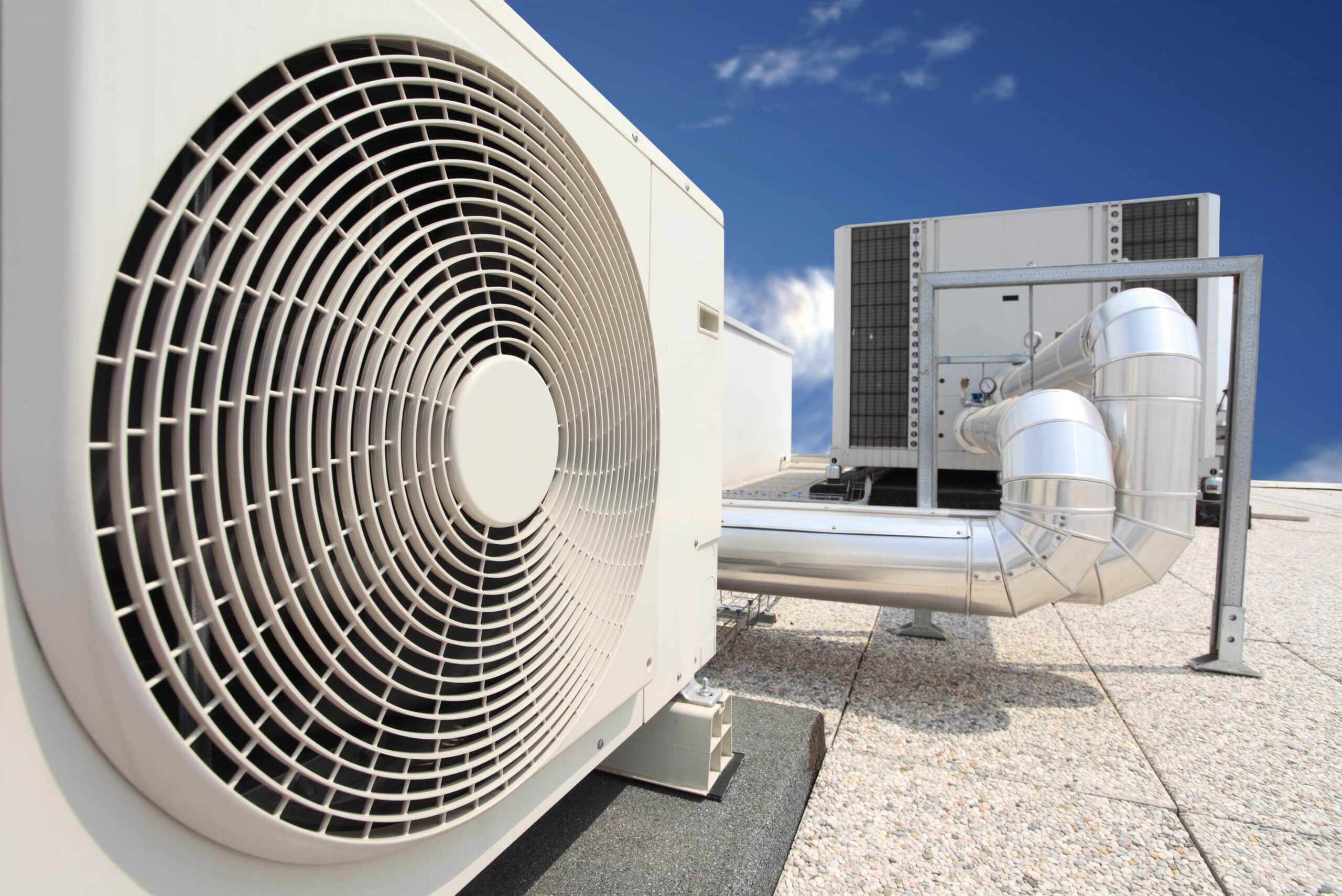
The Short Answer
Air conditioning and commercial refrigeration use the same basic thermodynamic process: a refrigerant absorbs heat at a low temperature and pressure, then releases that heat at a higher temperature and pressure. The equipment may look familiar across both applications, but the design obligation is different. Comfort cooling protects people and indoor conditions. Commercial refrigeration protects products, processes, and temperature dependent operations.
Neither system makes cold. Both move heat. The difference is the condition they must hold and the consequence if they fail.
One Cycle, Four Essential Steps
Most air conditioning and commercial refrigeration systems use a vapor compression cycle. Refrigerant circulates through four principal components in a closed loop. Its pressure and phase change so that heat can be collected where it is unwanted and rejected somewhere else.
| Stage | Primary component | What happens to the refrigerant | What happens to heat |
|---|---|---|---|
| 1. Absorb | Evaporator | Low pressure refrigerant boils as it passes through the coil. | Heat moves from air, water, a case, or a product zone into the refrigerant. |
| 2. Compress | Compressor | Vapor is compressed to a higher pressure and temperature. | Electrical work prepares the refrigerant to reject heat. |
| 3. Reject | Condenser or gas cooler | The hot refrigerant releases heat and usually condenses to liquid. | The system rejects the absorbed heat plus the compressor input to outdoor air or water. |
| 4. Expand | Expansion device | Pressure drops sharply, lowering the refrigerant temperature before the evaporator. | The refrigerant is ready to absorb heat again. |
The pressure difference created by the compressor is what sustains the cycle. The expansion device meters refrigerant into the evaporator, while fans or pumps move air or water across the heat exchangers. Controls keep the evaporator supplied without allowing liquid refrigerant to return to the compressor.
Temperature Lift Explains Much of the Difference
Cooling becomes more demanding as the evaporating temperature falls or the heat rejection temperature rises. Engineers call this difference temperature lift. A freezer operating on a hot roof day has a much larger lift than an air conditioning coil serving a mild office. Larger lift generally means more compressor work, lower efficiency, and greater stress on the equipment. This is why refrigeration cannot be understood simply as air conditioning with a lower thermostat setting.
How the Cycle Becomes Comfort Cooling
In homes, offices, schools, hotels, healthcare facilities, and other occupied buildings, the refrigeration cycle is one part of a larger air conditioning system. The evaporator may cool air directly in a packaged or split system, or it may chill water that is distributed to air handling equipment throughout a building.
As warm air passes across a cold evaporator coil, two kinds of cooling may occur. Sensible cooling lowers air temperature. Latent cooling removes moisture when water vapor condenses on the coil. Successful comfort cooling therefore depends on more than room temperature.
- Temperature: maintaining acceptable occupied conditions as outdoor weather, solar gain, equipment, and occupancy change.
- Humidity: removing enough moisture to limit discomfort and moisture related building risk without overcooling.
- Ventilation and filtration: introducing and conditioning outdoor air while controlling contaminants and pressure relationships.
- Air distribution: delivering conditioned air without drafts, noise, stagnant zones, or unintended short circuiting.
- Part load performance: matching capacity to changing demand through staging, variable speed equipment, or chilled water control.
Comfort systems commonly respond to zone thermostats, humidity sensors, occupancy schedules, outdoor air conditions, and building automation sequences. Their load changes by hour and season. Many spend far more time at part load than at full design capacity, so control stability and efficient modulation matter as much as nameplate efficiency.
How the Cycle Becomes Commercial Refrigeration
Commercial refrigeration serves refrigerated display cases, walk in coolers and freezers, restaurant kitchens, food processing spaces, distribution warehouses, laboratories, and temperature controlled healthcare storage. The heat load is not limited to the room around the equipment. It may include warm products entering storage, door openings, infiltration, lighting, fan motors, people, defrost heaters, and heat conducted through the insulated enclosure.
These systems often operate every hour of the year. Their evaporators run colder than comfort cooling coils, and frost can accumulate when moisture in the air freezes on the coil. Defrost is therefore an operating function, not an occasional maintenance task. Electric, hot gas, or off cycle defrost must clear the coil while limiting product temperature rise and avoiding excess energy use.
Food, Medicine, and Other Temperature Sensitive Uses
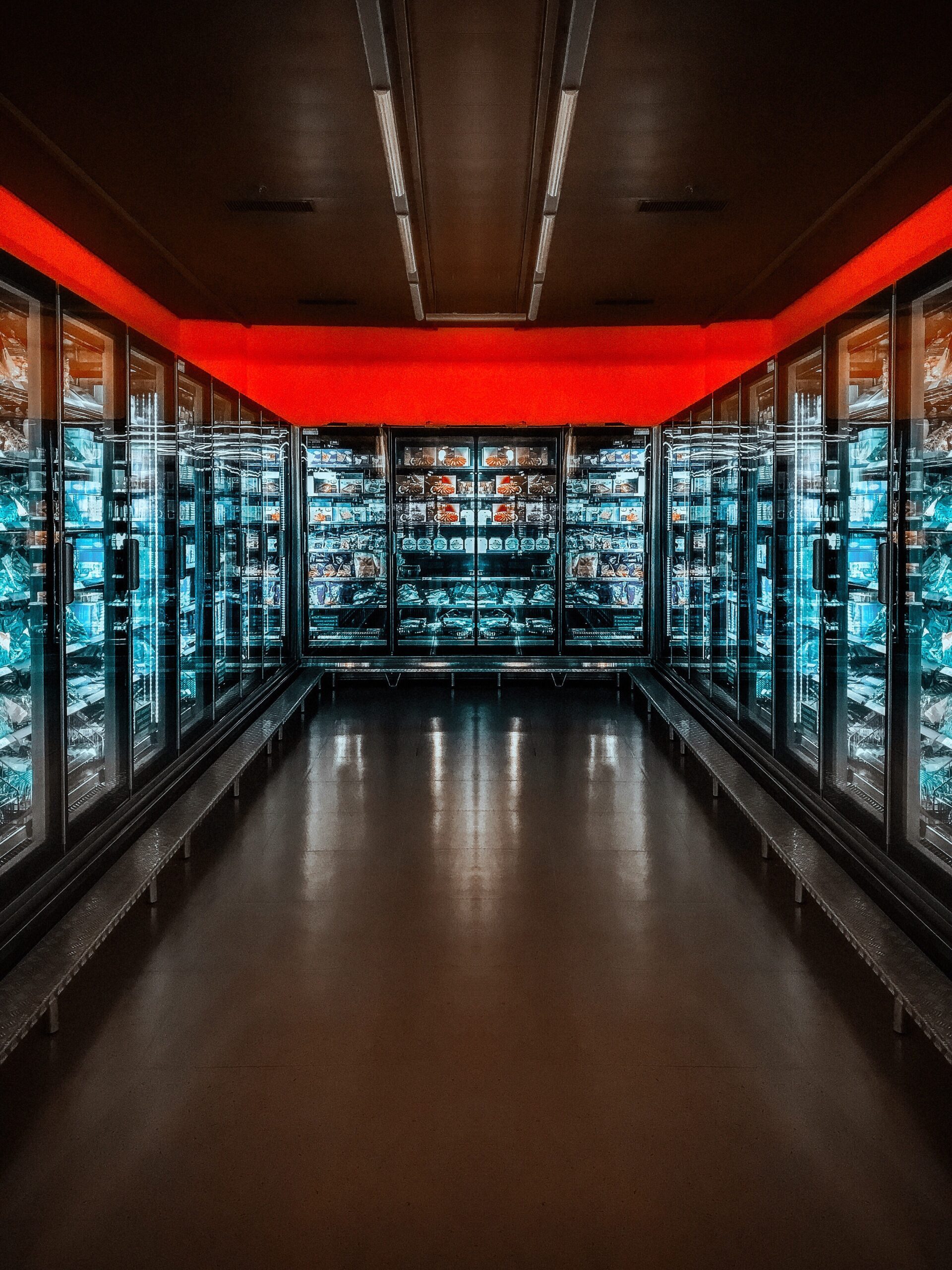
Food refrigeration slows biological and chemical processes, supports food safety, and extends usable life across the cold chain. The design must account for product pull down, door traffic, case loading, infiltration, condensate, and the interaction between refrigerated cases and the building HVAC system.
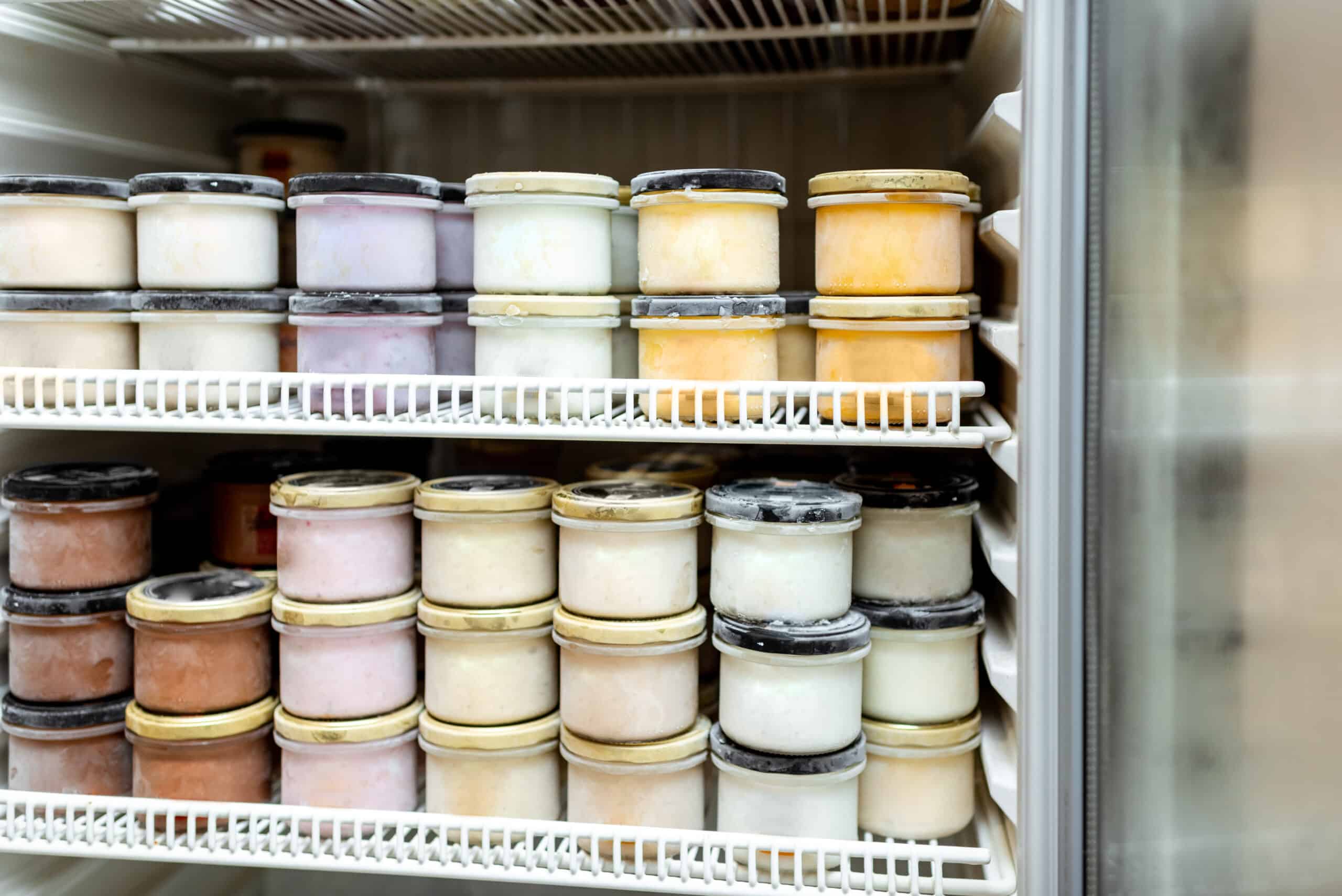
Medical storage demonstrates why “colder” is not always “safer.” Many vaccines require refrigerated storage between 2°C and 8°C (36°F and 46°F), while frozen and ultra cold products have different ranges. Controls, calibrated sensors, data logging, alarm escalation, backup power, and documented response plans become part of the cooling system’s performance obligation.
Where Data Centers Fit
Data centers are a related specialized cooling application, but they are not normally classified as commercial refrigeration. Their objective is to remove dense, continuous equipment heat and deliver acceptable conditions at server inlets. Systems may use direct expansion refrigeration, chilled water plants, airside or waterside economization, or liquid cooling. Airflow management, redundancy, controls integration, and power continuity often matter more than holding a product below a preservation temperature.
The Important Similarities
- The same thermodynamic cycle and core components: evaporator, compressor, condenser or gas cooler, and expansion device.
- The same energy balance: heat rejected outdoors equals the heat absorbed at the load plus the energy added by compression.
- The same dependence on clean heat transfer surfaces, correct refrigerant charge, adequate airflow or water flow, and sound piping practice.
- The same need for coordinated electrical power, controls, condensate management, structural support, acoustics, and maintenance access.
- The same fundamental efficiency challenge: minimize unnecessary temperature lift while meeting the required condition.
Where the Engineering Separates
| Design issue | Comfort air conditioning | Commercial refrigeration |
|---|---|---|
| Primary objective | Human comfort and acceptable indoor environmental conditions. | Product preservation, process stability, or cold chain continuity. |
| Controlled variables | Space temperature, humidity, airflow, ventilation, pressure, and schedule. | Case, box, product, or process temperature; suction and discharge conditions; defrost; alarms. |
| Load pattern | Highly variable with weather, solar gain, occupancy, and time of day. | Often continuous, with door openings, infiltration, product loading, and defrost events. |
| Operating temperature | Evaporator temperature supports cooling and dehumidification near occupied comfort conditions. | Lower evaporator temperatures support medium temperature, frozen, or ultra cold applications. |
| Moisture behavior | Condensation is managed to dehumidify air and drain water. | Moisture can freeze on coils, requiring intentional defrost and drainage control. |
| Typical control layer | Thermostats, humidistats, zone controls, ventilation logic, equipment staging, and BAS integration. | Temperature probes, electronic expansion valves, rack or compressor staging, defrost termination, pressure protection, monitoring, and alarm escalation. |
| Duty and resilience | Seasonal or variable operation; redundancy depends on occupancy and facility mission. | Frequently 24/7; redundancy and response time follow inventory value, safety, and allowable temperature excursion. |
| Failure consequence | Discomfort, loss of productivity, humidity problems, or unsafe conditions during extreme weather. | Spoilage, loss of medicine or research, interrupted operations, and potentially immediate financial or safety consequences. |
Refrigerants: Different Choices, Shared Transition
There is no single refrigerant for air conditioning and another for refrigeration. Selection depends on the required temperatures, equipment size, location, efficiency, safety classification, applicable codes, manufacturer support, service capability, and regulation.
Many legacy comfort systems use R-410A. Newer equipment increasingly uses lower global warming potential options such as R-32 and R-454B. These refrigerants are classified as mildly flammable, so equipment design, installation practices, detection or mitigation requirements, and code compliance must be considered together.
Commercial refrigeration has historically used HFCs such as R-404A and R-507A in many applications. Current options include lower GWP blends and natural refrigerants such as carbon dioxide (R-744), propane (R-290) in permitted charge sizes and equipment types, and ammonia (R-717), particularly in industrial systems. Each option changes the design conversation. Carbon dioxide can operate at very high pressure. Propane and some HFO blends introduce flammability considerations. Ammonia is efficient but toxic and requires appropriate system design, training, and emergency planning.
Refrigerant selection is now a life cycle decision: first cost, efficiency, safety, code acceptance, leakage, service availability, and future supply all belong in the same evaluation.
In the United States, EPA Technology Transitions rules restrict higher GWP HFCs by equipment sector and compliance date. Requirements differ among comfort cooling, self contained refrigeration, supermarket systems, remote condensing units, and cold storage. Because rules and enforcement dates can change, the current federal requirements, state rules, adopted safety standards, and local codes should be confirmed for every project.
Operating Life Is More Than a Year Count
Air conditioning and refrigeration equipment do not have a universal service life. Runtime, starts, temperature lift, ambient exposure, corrosion, coil cleanliness, oil management, refrigerant leakage, maintenance quality, and parts availability all affect longevity. Commercial refrigeration often accumulates operating hours faster because it runs continuously. Comfort equipment may experience stronger seasonal cycling or long periods at part load.
A responsible life cycle plan considers maintainability from the beginning: isolation valves, service clearances, access to coils and filters, replaceable components, leak detection where required, trending, spare parts, and an orderly strategy for refrigerant transition. A nominally efficient system that is difficult to maintain may perform poorly for most of its actual life.
Controls Define the Real System
Mechanical equipment only delivers its intended result when sensors, sequences, and operators work together. Comfort control may reset temperatures, vary fan speed, schedule ventilation, and coordinate zones. Refrigeration control may float suction or condensing pressure, stage compressors, manage electronic expansion valves, initiate and terminate defrost, and issue alarms before product temperatures exceed allowable limits.
The most useful monitoring distinguishes an air temperature fluctuation from a true product risk, records trends, and directs an alarm to someone who can act. In mission critical applications, the response path is part of the design: who receives the alarm, how quickly they respond, what backup capacity is available, and how long the protected load can tolerate a failure.
Why Both Systems Matter to the Modern World
Air conditioning supports habitable buildings, heat resilience, healthcare, education, hospitality, manufacturing, and productive work. Commercial refrigeration supports food safety, reduces spoilage, enables long supply chains, preserves medicines and biological materials, and stabilizes industrial processes. Specialized cooling keeps communications, finance, cloud services, and other digital infrastructure operating.
That importance also creates responsibility. Cooling equipment consumes energy and can affect climate through refrigerant leakage. Good engineering reduces both impacts by lowering loads, minimizing temperature lift, selecting appropriate equipment and refrigerants, commissioning controls, detecting faults, and maintaining performance after occupancy.
Questions to Resolve Before Design
- What exact condition must be maintained, and is the controlled variable air temperature, product temperature, humidity, or equipment inlet condition?
- What are the sensible, latent, infiltration, ventilation, product, and process loads, including pull down and defrost?
- How many hours per year will the system operate, and at what part load conditions?
- What happens during a power loss, component failure, alarm, or maintenance shutdown?
- What refrigerants are allowed by current regulation, safety standards, adopted codes, and the owner’s operating capabilities?
- Where will heat be rejected, and can the condenser or gas cooler operate under realistic peak ambient conditions?
- Can technicians safely reach, isolate, clean, test, and replace the components that determine performance?
Final Perspective
Air conditioning and commercial refrigeration are not competing technologies. They are different expressions of the same heat transfer cycle, shaped by different temperatures, loads, controls, operating profiles, and consequences of failure. Understanding the common science is the starting point. Understanding the protected outcome is what turns that science into reliable engineering.
The story behind the science
In Slowing Time, Dino Pappas explores how refrigeration helped humanity push back against heat, decay, and the limits of nature.